June 09, 2026 · 8 min · Radianz Team
APER 2026: prioritize French C&I buildings and parking lots
A B2B solar prospecting guide for turning France's APER 2026-2028 deadlines into a qualified pipeline for parking lots, warehouses and C&I assets.
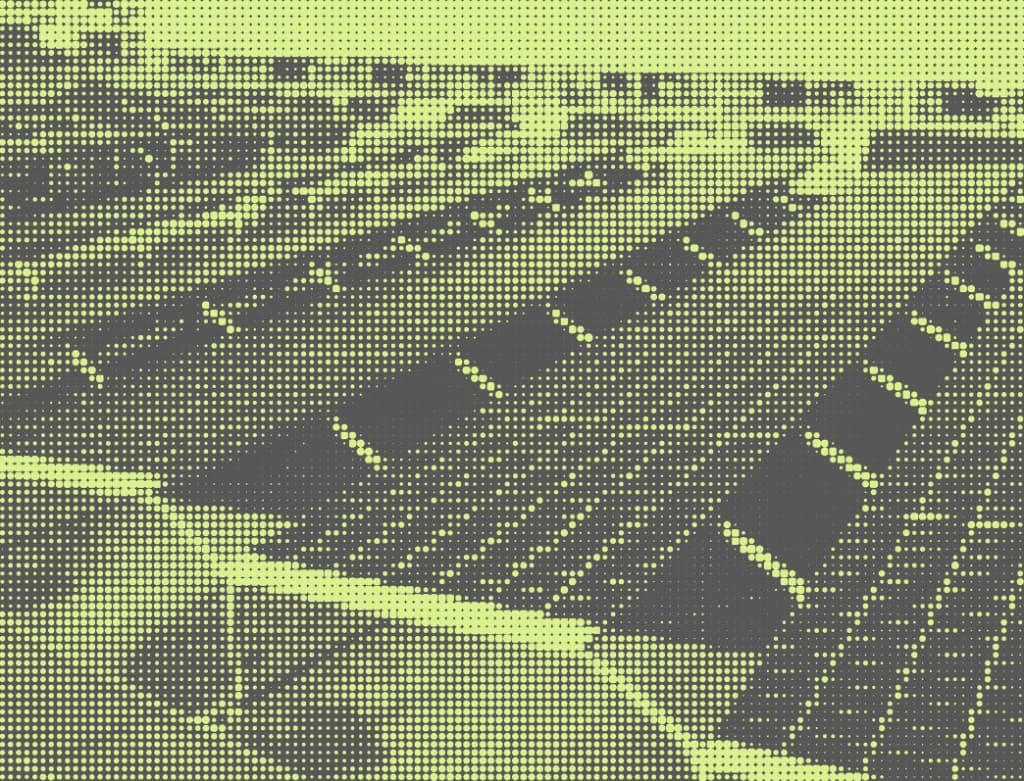
Why APER is now a commercial signal, not only a compliance topic
France's APER framework has moved from legal watchlist to sales trigger. For B2B solar developers, C&I installers, energy service companies, and prospecting teams, the 2026-2028 solarization calendar creates a practical way to identify accounts with a real reason to act. The strongest opportunities are not generic energy leads. They are commercial, industrial, logistics, retail, healthcare, office, and public-access assets where a legal requirement, an operational constraint, and a potential energy project now overlap.
The core keyword is "APER solarization commercial buildings parking 2026". Behind that search intent, decision makers are usually asking five business questions. Is my asset covered by the law? Which deadline applies? How much roof or parking area must be equipped or shaded? Can a mixed solution combine photovoltaic canopies and vegetation? How do I move from compliance risk to a financially defensible project? This intent is valuable because it already contains urgency, budget relevance, and a need for expert guidance.
The mistake is to treat every affected site as equally attractive. A 12,000 m2 retail parking lot, a high-consumption warehouse, an industrial plant with safety constraints, a multi-tenant office campus, and a cold-chain logistics hub all require different qualification paths. This is why APER should feed an account score instead of a flat outreach list. Our guide to B2B solar prospecting in 2026 explains the same principle: market timing only creates revenue when field data and sales execution move together.
What large parking lots change in the prospecting pipeline
Recent sources align on one central point: outdoor parking lots above 1,500 m2 are at the heart of the APER obligations. Photovoltaique.info, updated on February 17, 2026, states that solarization and vegetation obligations apply to all outdoor parking areas above that threshold, with key dates on July 1, 2026 for parks above 10,000 m2 and July 1, 2028 for those above 1,500 m2. It also highlights special cases for parking lots attached to buildings that already fall under solarization rules, new public-access parking lots, and concessions.
For prospecting, that creates three different segments. The first segment is made of very large parking lots, often connected to retail parks, logistics platforms, industrial campuses, airports, transport hubs, or large public facilities. The urgency is high, so outreach should quickly establish whether a project has already started, whether an engineering advisor has been appointed, and whether the site still lacks a techno-economic assessment. The second segment includes parking lots between 1,500 and 10,000 m2. These are less urgent but much more numerous, making them suitable for portfolio campaigns and nurture sequences. The third segment includes complex parking lots with ICPE-type constraints, heavy-goods vehicle flows, heritage zones, dangerous goods, or redevelopment plans.
The late-2025 Huwart adjustments, as summarized by several market players, make the obligation more flexible by allowing mixed shading. In simple terms, part of the required shading can come from vegetation as long as a minimum photovoltaic component remains. This does not weaken the sales opportunity. It makes qualification more important. Instead of selling a binary "solar canopy or nothing" project, teams should help the buyer compare scenarios: applicable area, effective solarizable area, operational constraints, full-canopy option, mixed option, possible delay conditions, and project economics.
Commercial and industrial buildings: do not stop at the parking lot
Commercial, industrial, craft, administrative, office, warehouse, commercially operated hangar, and certain public-access facilities are also included in the broader building coverage obligations. The Oise state services summarize that APER applies to new buildings, heavy renovations, and existing buildings under different articles of the law. For the cases covered, the minimum coverage ratio has been increasing over time: 30% since July 2023, 40% from July 1, 2026, and 50% from July 1, 2027.
For a solar B2B team, the right unit of analysis is not "a roof" but an entire asset. You need to qualify the roof, the parking area, onsite load, grid connection, planning constraints, ownership structure, tenant relationships, CAPEX calendar, ESG reporting pressure, and operational downtime tolerance. A warehouse may have a highly visible roof but an unfavorable structure. An industrial site may have attractive daytime consumption but excluded safety zones. A shopping center may combine self-consumption, solar canopies, EV charging, tenant communication, and heat-island reduction.
That logic aligns with the framework in our B2B solar prospecting guide. The French regulatory context is specific, but the scoring principle is universal: a useful score must be explainable by sales teams, credible for technical teams, and actionable for asset owners. APER adds an urgency variable to the score. It does not replace feasibility work.
Turning APER into an account scoring model
A practical APER scoring model can start with five signal families. The first is regulatory: parking surface, building footprint, building use, applicable deadline, concession status, lease context, and whether the project is new, renovated, or existing. The second is technical: roof geometry, shading, roof condition, construction access, safety restrictions, ICPE exposure, truck movement zones, and available land. The third is energy-related: daytime load, energy price exposure, self-consumption potential, EV charging demand, storage potential, and surplus export options. The fourth is financial: CAPEX appetite, third-party investment fit, return horizon, compliance budget, and sensitivity to power price volatility. The fifth is commercial: identified owner, multi-site group, ESG maturity, web intent, procurement signals, and known construction projects.
The output should be an action queue, not only a number. Account A may require immediate senior outreach because its parking lot is larger than 10,000 m2 and the 2026 deadline makes inaction risky. Account B may belong in a structured nurture program because its sites are smaller but the corporate portfolio is large enough to justify a grouped campaign. Account C may need technical pre-screening before sales engagement because safety constraints could dominate the economics. This segmentation prevents sales teams from wasting time on assets that look promising on satellite imagery but cannot move through a real decision process.
Public data is enough to start, but not enough to close. Aerial imagery, parcel data, company identifiers, building typology, construction news, charging infrastructure signals, ownership data, and intent signals all help reduce false positives. Radianz is designed around that chain: detect, score, and activate high-potential C&I sites before the same regulatory deadline becomes a crowded procurement process.
Outreach playbook for solar B2B teams
The first outreach message should not lead with fear of penalties. It should help the decision maker understand their situation. A useful opener can mention the estimated parking or building area, the likely deadline, and the need to verify the truly applicable area. Then the sales rep can offer a short diagnostic: parking qualification, preliminary solar potential, obvious constraints, and compliance scenarios. That posture is more credible than a generic energy savings pitch.
The second step is to adapt the offer to the asset profile. For an owner-operator, self-consumption and daytime load coverage may be central. For a property company or landlord, asset value, compliance, tenant coordination, and third-party financing may matter more. For a multi-site group, the priority is a matrix: which sites require action now, which sites should be documented for 2028, which sites are excluded, and which sites need monitoring because a redevelopment or lease event may change the business case.
The third step is proof. Regulatory sources must be cited, but buyers also need operational interpretation. Which surfaces are included? Which can be excluded? When can a techno-economic study support a derogation? How do logistics flows, safety zones, planning constraints, or vegetation options change the project? What is the path from initial screening to decision? This proof lowers perceived risk and opens conversations with real estate, HSE, energy, finance, and operations stakeholders.
How to qualify urgency without overpromising
APER-related outreach works best when it stays precise. Do not promise that every eligible parking lot will become an attractive solar canopy project. Do not claim that every roof can host panels without structural review. Do not compress all deadlines into one message. A more effective approach is to classify uncertainty. The sales team can say: "Based on public information, this site appears likely to require a review; the next step is to confirm the applicable surface, ownership structure, and technical constraints." That sentence is both commercially useful and professionally safe.
This also helps account executives manage objections. If the buyer says a project is already planned, the conversation can shift to benchmarking, portfolio rollout, or complementary assets. If the buyer mentions constraints, the rep can propose a pre-feasibility screen rather than pushing a full proposal. If the buyer owns many sites, the rep can suggest prioritizing the portfolio by deadline, usable surface, and energy value. In all cases, APER becomes a reason to structure the next step, not a blunt pressure tactic.
Recent sources worth following
This article uses three source categories. Photovoltaique.info provides a detailed page on the solarization obligation for outdoor parking lots, updated in February 2026. The Oise state services summarize the photovoltaic or vegetated coverage obligations for buildings. Idex's article on Huwart and parking lot solarization illustrates the market interpretation of mixed shading and third-party financing.
The takeaway for B2B solar teams is straightforward: 2026 is not only a compliance milestone. It is an opportunity to build a sharper C&I pipeline by combining regulatory triggers, technical screening, energy economics, and account intelligence. Teams that qualify the right sites early can enter the conversation before the market turns the same requirement into a standardized tender.